Spring Contractor Rush: How AI Phone Systems Save Your Peak Season
Another harsh Atlantic winter is behind us, and you know what that means — spring rush season is about to hit like a freight train. Between weather delays pushing projects into May and June, and homeowners finally getting their insurance claims sorted, we're looking at one of those compressed seasons where three months of work needs to happen in eight weeks.
The question isn't whether you'll get slammed with calls. The question is: how many of those calls will you actually catch?
The Atlantic Spring Phenomenon: When Weather Creates Chaos
Let's be honest about what spring looks like in Atlantic Canada. March teases you with a few decent days, then dumps another foot of snow. April brings mud season that makes half your job sites inaccessible. By the time May rolls around with actual working weather, every homeowner, property manager, and insurance adjuster in the Maritimes is calling contractors simultaneously.
We see this pattern every year with our clients. The phone starts ringing in February with "as soon as the weather breaks" calls. Then March hits and it's all rescheduling. April brings the "can you get to my site yet?" calls. And by early May, it's pure chaos — emergency repairs that can't wait anymore, insurance work that's been on hold since December, and new projects that homeowners want started yesterday.
The brutal math: you're getting 2-3x your normal call volume right when your crew is pulled in ten different directions trying to catch up on delayed work.
Why Traditional Phone Handling Breaks Down in Peak Season
Our Missed Call Rescue service exists because we've watched too many Atlantic contractors lose massive opportunities during spring rush. Here's what typically happens:
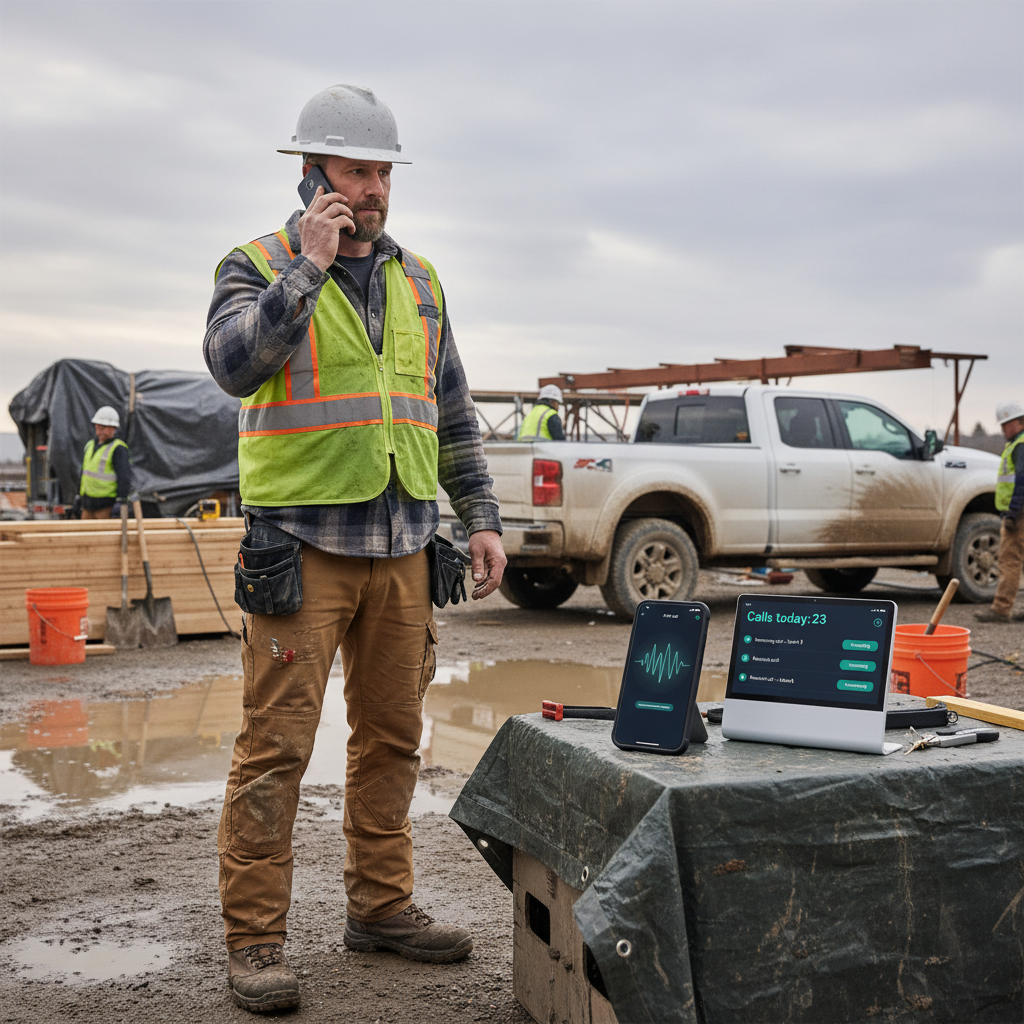
Your crew is on-site, phones on silent. You can't answer calls when you're up on a roof in Dartmouth or crawling through a basement in Moncton. The work has to get done, but those calls keep coming.
Office staff gets overwhelmed. If you have someone answering phones, they're juggling existing customer callbacks, new estimate requests, supplier calls, and trying to coordinate schedules that change by the hour due to weather.
Evening callback lists become unmanageable. You finish a 12-hour day and have 23 missed calls. By the time you start calling people back at 8 PM, half of them have already booked someone else.
Weekend calls go completely unanswered. Saturday morning is prime time for homeowner calls, especially after a week of bad weather. But it's also your only time to catch up on estimates and planning.
The result? Statistics Canada reports that small service businesses lose an average of 15-20% of potential revenue during peak periods simply due to communication gaps. In Atlantic Canada's compressed spring season, that percentage often runs higher.
How AI Phone Systems Handle the Spring Surge
Our AI Secretary doesn't take sick days, doesn't get overwhelmed, and never puts anyone on hold during a roofing emergency. Here's how it transforms spring rush chaos:
24/7 availability means zero missed opportunities. When Mrs. Johnson in Halifax calls at 6 AM because her basement flooded overnight, the AI picks up immediately. It gathers all the details, checks your schedule, and either books an emergency slot or explains your next availability. She doesn't have to wait until your office opens — and she doesn't call your competitor instead.
Real-time schedule management. The system integrates with your calendar, so when someone calls looking for a roof estimate, it can see that you have openings Thursday morning and Friday afternoon. It books the appointment instantly, sends confirmation texts, and adds the details to your CRM. No double-booking, no scheduling conflicts.
Bilingual support for Atlantic Canada's reality. Whether your caller is more comfortable in English or French, the AI handles both fluently. That's especially important in New Brunswick, where spring storm damage calls come in both languages and speed matters.
Emergency call intelligence. The system recognizes urgent situations — water damage, electrical issues, structural problems — and has protocols to either transfer immediately to your emergency line or gather detailed information for priority callback within 30 minutes.
Real-World Spring Rush Scenarios
Let me walk you through some actual situations where we've seen the AI Secretary make a difference:
Scenario 1: Insurance Storm Damage Rush After that late April ice storm hit the South Shore, one of our roofing clients got 47 calls in two days. His crew was working 14-hour days doing emergency tarping. The AI handled every single call, scheduled 23 estimates, identified 8 emergency situations for immediate callback, and pre-qualified jobs by insurance company and claim number. Zero missed opportunities.
Scenario 2: Mud Season Rescheduling Nightmare A landscaping contractor had 15 jobs scheduled for early April that got delayed by soggy conditions. When the weather finally broke, everyone wanted to reschedule for the same week. The AI called each customer, presented available options, locked in new dates, and updated the entire schedule. What would have taken his office manager two full days happened in 3 hours.
Scenario 3: Weekend Emergency Flood Saturday morning, 7:30 AM, water main break affects 6 houses in Antigonish. Our plumbing client was at his daughter's hockey tournament. The AI took all six calls, recognized it was the same street (likely connected issue), dispatched the emergency crew, and had the client on-site by 9 AM with full situational awareness.
The Revenue Math: What Spring Rush Really Costs
Here's the calculation that makes contractors switch to AI phone systems: every missed call during spring rush season represents roughly $300-800 in lost revenue, according to Atlantic trades benchmarks. That's just the immediate job. Factor in lost referrals, repeat customers who go elsewhere, and the reputation hit from being "impossible to reach," and the real cost multiplies.
With traditional phone handling, even good contractors miss 25-30% of calls during peak periods. On a AI Secretary at $297/month, you need to catch just one extra job to break even. Most of our clients report capturing 40-60 additional opportunities in their first spring season.
Key Takeaways
• Spring rush season in Atlantic Canada creates 2-3x normal call volume in compressed timeframes • Traditional phone systems break down when crews are busy and calls spike simultaneously • AI phone systems provide 24/7 coverage with real-time scheduling and emergency recognition • Every missed call represents $300-800 in potential revenue during peak season • Bilingual capability essential for New Brunswick and multicultural Maritime markets
Ready to Never Miss Another Spring Rush Call?
Don't let this spring season slip away because you couldn't answer the phone. Our Missed Call Rescue service is designed specifically for Atlantic Canadian contractors who need bulletproof phone coverage during the chaos of peak season.
We're offering founders' pricing — $0 setup fee for the first 20 customers, just $297/month including 500 minutes. That covers everything: 24/7 answering, appointment booking, customer lookup, real-time estimates, and emergency call handling.
Book your free ROI audit at truenorthautomation.ai/book. We'll show you exactly what those missed calls cost your business last spring — and how to make sure it never happens again.